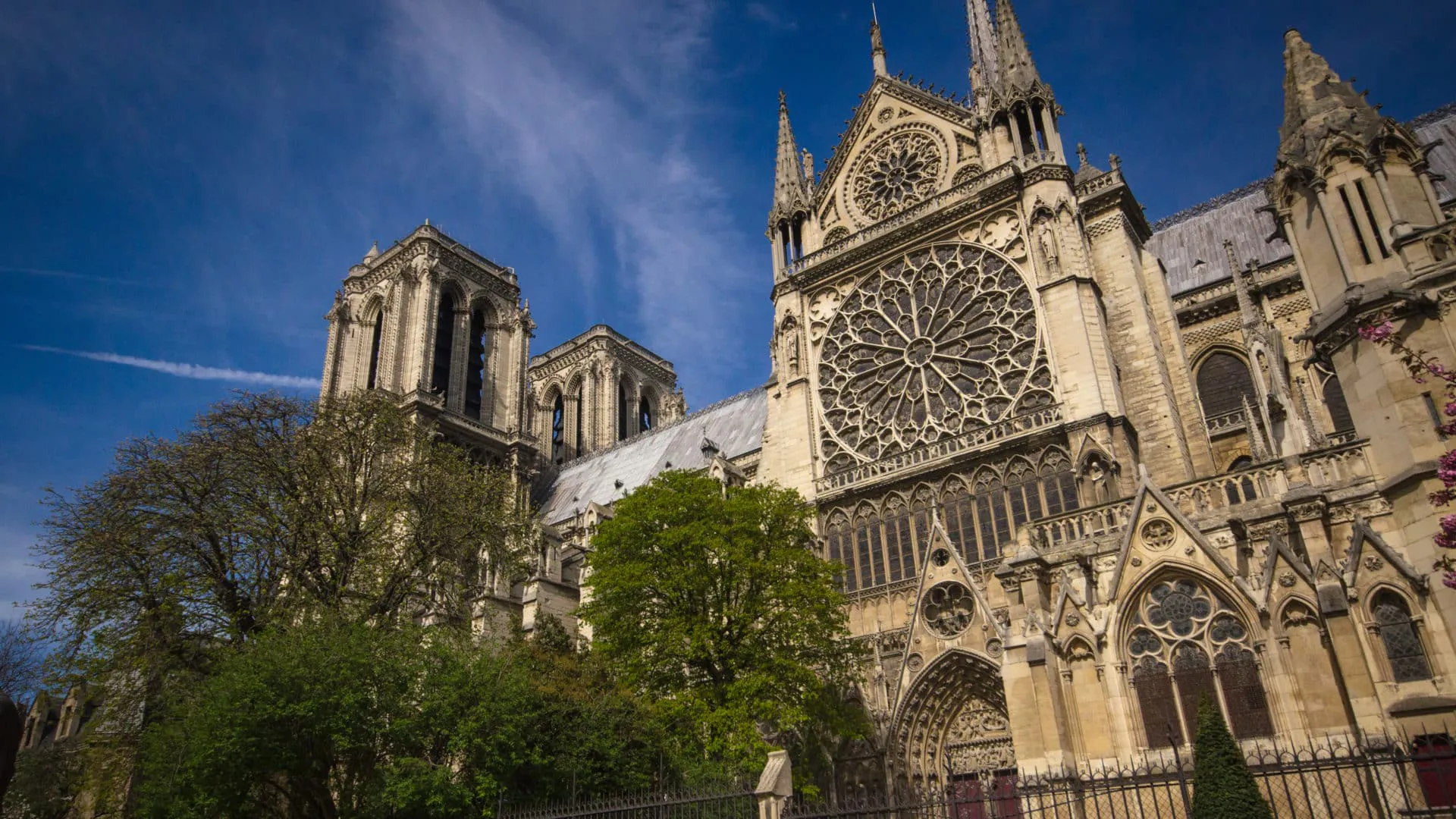
After the 2019 fire at the Cathedral of Notre Dame in Paris, France, heated conversations emerged about the future of the landmark. While some people demanded that reconstruction aim for a precise replication of the previous design, the French Prime Minister announced a contest to redesign the building’s spire. Ultimately, when the cathedral reopened in 2024, the spire was rebuilt to reflect the original design.
Whether we realize it or not, the conversations about rebuilding Notre Dame were influenced by the topic of the theology of sacred space. Ever since Eden, humans have struggled to grasp the presence of God—and specifically, where God dwells. Our attempts to understand the places where heaven and earth collide lead us to label such places as “holy.” Holy spaces are often where we come to connect with the Divine, such as spaces of worship like churches and cathedrals.
CDF’s goal is to help churches grow and, most frequently, this involves assisting churches with facility issues. As your church aims to be faithful stewards of your physical buildings and the financial resources directed toward those physical buildings, it might be wise to consider how the structuring of your sacred spaces can draw people to the Lord.
What kind of structures do churches need?
Generally, church buildings reflect one of two values: timelessness or utility.
American churches built before the 1940s are often beautiful structures. Many are built from natural materials—like strong timbers or quarried stone—and regularly feature intricate stained glass fashioned by artisans. Church members would marry, raise their kids, celebrate baptisms, and hold their funerals all in the same sanctuary. The value of timelessness is evident as a cultural priority of those generations.
The greatest shift in the view of sacred space in the United States can be traced to the explosive growth of the suburbs. After World War II, returning American soldiers sought home ownership opportunities outside the urban core. What were once smaller villages soon become massive communities with fewer generational ties. Among other things, the quick influx of new residents created a need for new houses of worship.
The new church buildings of the 1950s and subsequent years were constructed with a greater interest in the value of utility. The buildings were simpler, and more space was given to accommodate adequate parking. The sanctuaries were smaller and ceilings lower. They had pews, but the materials to shape them were composite. The stained glass in these structures were essentially large swatches of colored glass. The foremost feature was functionality.
New churches today are still primarily concerned with utility rather than timelessness. Most congregations want their buildings to facilitate flow and fellowship, both of which are necessary and valuable. Yet, we know that our houses of worship can impact how we view God. Let’s look to the Bible, then, to observe what beauty and timelessness in sacred spaces can provide.
Create space for beauty.
“Worship the Lord in the splendor of his holiness,” we’re instructed in Psalm 29:2 (NIV). When King Solomon set out to construct the first temple, he employed craftsmen and artisans to ensure that the structure would be breathtaking. The temple was designed “so that all the peoples of the earth may know that the Lord is God and that there is no other,” we read in 1 Kings 8:60 (NIV). The temple’s beauty was to be awe-inspiring.
This same value is clearly evident in the architecture of Notre Dame. The design of the building draws all who enter to look up to heaven and often fills them with a sense of awe and reverence. Even though most of today’s church architecture is utilitarian, church leaders should consider how to make use of their existing environments to evoke wonder at the Lord’s glory and coax worshippers outside of the norm.
Create space for solemnity.
There’s an often-overlooked tidbit in the description of how Solomon approached the construction of the temple. In 1 Kings 6:7, we read that the king commanded workers to do all of their loud work away from the building site. Stones were prepared in the quarry so that no hammer or iron tool was heard while it was being built. The lesson was that the sacred space was otherworldly, and the distracting noise of life would not be tolerated there. The muted temple would create an environment for worshippers to “be still and know that I am God” (Psalm 46:10 NIV).
Our church structures ought to facilitate both boisterous praise and quiet contemplation. We have robust sound systems to ensure the message of the gospel can be heard through song and through teaching, but what about creating space for the Lord to speak in stillness? Where in your church building are there venues for reflection?
Create space for royalty.
On the first day Solomon’s temple was opened, after the priests withdrew from the worship hall, “the cloud filled the temple of the Lord. And the priests could not perform their service because of the cloud, for the glory of the Lord filled his temple” (1 Kings 8:10–11 NIV).
Regardless of their architecture, aesthetics, or accoutrements, church buildings provide space for worshippers to encounter God. When the body of Christ gathers, how does the way we set up and care for our spaces of worship make room for people to encounter the King of the Universe?
Keeping space sacred.
We must be careful that we do not distort the use of our church buildings by overemphasizing either timelessness or utility. Structures themselves aren’t holy; they become sacred when God inhabits them.
If we understand the teachings of the apostle Paul from 1 Corinthians 6, our list of sacred spaces becomes incredibly long. “Do you not know that your bodies are temples of the Holy Spirit, who is in you, whom you have received from God? You are not your own; you were bought at a price. Therefore honor God with your bodies” (1 Corinthians 6:19–20 NIV).
We are His sacred space. We’re walking tabernacles. Where we go, God goes with us.
Every Sunday (and on every other day of the week as well!), Christians across the globe gather together to celebrate the good news of Jesus’s resurrection—some in structures decorated with stained glass, and some in humble dwellings. The diversity of these places of worship is unparalleled, and the Lord is praised in all of them.
We are wise to consider how to structure our holy spaces so that more people can meet and know the Lord. We do this so our places of worship will continue to be filled with millions of sacred temples—the bodies of those who worship Him—whom moth or rust (or even fire) cannot destroy.
Let’s journey together.
God calls His people into a story of transformation. CDF is committed to helping Christians and churches embrace their part in His story by helping churches grow.
You don’t need to do ministry alone. You can find opportunities to connect, plus more content and conversations about church administration, at XP Summit: xpsummit.org.